
Disclosure: WorkWise is reader-supported. When you buy through links on our site, we may earn an affiliate commission at no extra cost to you. Learn more.
At-a-glance recommendations
A fast comparison list for the products covered in this guide.
Hydro Flask 24oz Water Bottle
The cue to refill at lunch becomes a cue to leave the desk. Small but reliable.
Bento-Style Lunch Container
Forces portion control and prevents the "make a giant lunch because I have time" trap that leads to crashes.
A real book (not work-related)
The most underrated lunch tool. A fiction novel beside your lunch plate trains your brain to associate lunch with non-work — and you'll actually read…
"Eating at your desk" is a small habit that quietly costs you most of your afternoon. The data on lunch breaks for remote workers is consistent and harsh: those who take real breaks outperform those who don't, despite "wasting" 30-60 minutes a day. Here's how to actually take one.
Why desk lunches don't work
- No psychological reset. Your brain doesn't transition out of work mode, so afternoon work feels like a 4-hour continuous slog.
- Worse digestion. Stress-eating (even mild work stress) impairs digestion and adds to the post-lunch slump.
- You eat too fast. Faster eating = larger blood sugar swing = bigger crash.
- You eat more. Distracted eating consistently leads to overeating by 20-30%.
- You don't enjoy it. Genuinely. Pleasant eating is a small daily joy. Don't waste it on Slack.
The 5-step real lunch break
1. Schedule it
Put "Lunch" on your calendar as an event you don't move. 12:00-12:45 or 1:00-1:45 — your choice, but the same time daily. The consistency matters more than the timing.
2. Leave the work room
Physically. Eat in the kitchen, on the porch, at a different table — anywhere that's not your desk. The change of scenery is half the benefit.
3. Don't bring work
No laptop, no work phone notifications, no "I'll just check Slack between bites." If you can't fully unplug, even leaving the work phone face-down in another room helps.
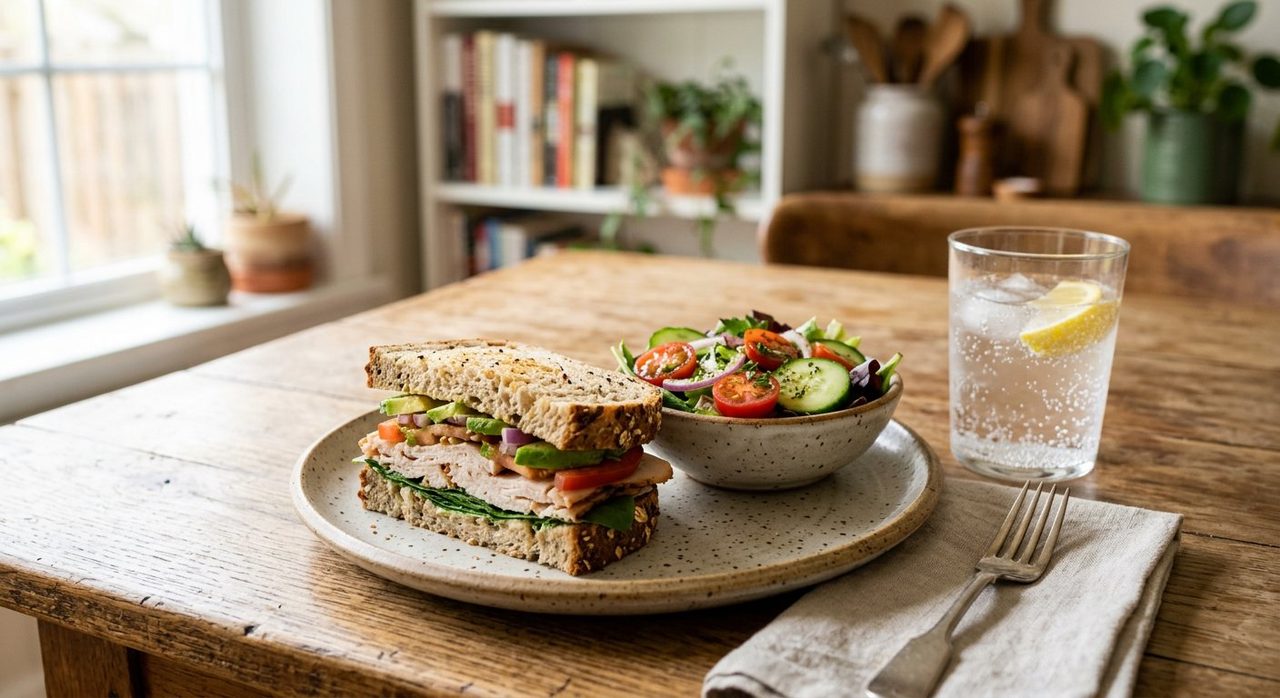
4. Eat real food, mostly plants
Protein + vegetables + some carbs. Avoid heavy starches and alcohol — both cause the post-lunch crash that you've probably been blaming on "afternoon fatigue."
5. Do something restorative
Read a book chapter. Walk around the block. Call a friend. Sit in the sun. Anything that isn't a screen. Even 10 minutes of true non-work after eating completely changes your afternoon.
The 4 lunch break formats that work
The "real meal" lunch (45-60 min)
Cook something simple, sit down, eat properly, read or chat. The platinum standard; only achievable if you control your schedule.
The "walk-and-eat" lunch (30 min)
Pre-make a sandwich or wrap. Eat while walking outside. Combines lunch, sunlight, and movement. Surprisingly effective.
The "two-part" lunch (20 + 15 min)
20 minutes eating, 15 minutes doing something restorative. Best for busy meeting days when you can't be away for 45 minutes straight.
The "co-worker" lunch (45 min, weekly)
Schedule a weekly virtual lunch with a remote colleague — same time, both on video, both eating. Replicates the social benefit of office lunches.
Foods that wreck the afternoon
- Big sandwiches or burgers. Heavy carbs + protein = guaranteed 2pm crash.
- Pasta-heavy meals. Same problem, worse.
- Alcohol of any kind. Even one beer cuts afternoon productivity measurably.
- Sugary drinks/desserts. The crash is real and predictable.
- Skipping lunch entirely. Worst option — leads to overeating and crash-snacking later.
What we'd buy
Hydro Flask 24oz Water Bottle
The cue to refill at lunch becomes a cue to leave the desk. Small but reliable.
Bento-Style Lunch Container
Forces portion control and prevents the "make a giant lunch because I have time" trap that leads to crashes.
A real book (not work-related)
The most underrated lunch tool. A fiction novel beside your lunch plate trains your brain to associate lunch with non-work — and you'll actually read more this year.
Final word
The desk lunch is a remote-worker affliction with no good defense. Take real lunch breaks — same time daily, away from work, with food you enjoy and a few minutes of restorative activity. Your afternoon will thank you, your output will improve, and you'll like the work day more. Pair this with our broader end-of-day fatigue guide for the full picture.
Frequently asked questions
Why do remote workers skip lunch breaks?
Without colleagues going to lunch around you, there's no social cue to stop. The result: most remote workers eat at their desk while continuing to work, which isn't a break at all and predictably destroys afternoon focus.
How long should a lunch break be?
20 minutes minimum — long enough for blood sugar to stabilize after eating. 45-60 minutes is ideal, including a short walk or change of scenery.
Should I eat at my desk during a busy day?
Almost never. Studies consistently show that eating at the desk doesn't save time — it just shifts the energy crash to 2-3pm instead. A real 30-minute break recovers more than 30 minutes of work.
What's the best thing to eat for lunch when working from home?
Protein + complex carbs + vegetables, in moderate portions. Heavy or carb-only meals cause the post-lunch crash. Skip alcohol entirely — even one drink at lunch crushes afternoon productivity.
Is it OK to work through lunch occasionally?
On rare deadline days, fine. Done consistently, it's a sign of bad planning, not virtue. Sustained over weeks it causes measurable productivity decline.
Spotted a mistake or want to suggest a product we should test? Get in touch — we read every message.