
Disclosure: WorkWise is reader-supported. When you buy through links on our site, we may earn an affiliate commission at no extra cost to you. Learn more.
This article is general information, not tax advice. Tax law varies dramatically by country, state, and personal situation. Always confirm with a qualified tax professional before filing — especially the first year you claim a home office.
That said: the home office tax deduction is one of the most under-claimed benefits for self-employed workers and freelancers. A real home office can mean thousands of dollars off your annual tax bill — but only if you know what counts, what to track, and how to document it. Here's the plain-English overview.
Who can claim it (and who can't)
In most jurisdictions, the home office deduction is for people earning self-employment income — freelancers, sole proprietors, independent contractors, and some partners in partnerships. W-2 employees in the US cannot currently claim it (changed by the 2017 TCJA, may revert after 2025). Other countries differ significantly:
- UK — Both employees and self-employed can claim, with different methods.
- Canada — Employees can claim if they work from home more than 50% of the time and have a signed T2200 form.
- Australia — Multiple methods including fixed-rate per hour and actual expenses.
- EU — Varies by country; many allow employee deductions if certain conditions are met.
The two basic requirements (US example)
- Regular use. You use the space consistently for work, not occasionally.
- Exclusive use. The space is used only for work — not also as a guest room, dining area, or kid's playroom.
The "exclusive" requirement is where most people lose the deduction. A desk in the corner of your bedroom doesn't qualify (unless that exact corner is screened off and used only for work). A converted closet, garage, or spare bedroom that's been turned into a workspace and nothing else — that qualifies.
What you can deduct (self-employed)
Indirect expenses (a portion based on home-office square footage)
- Rent or mortgage interest
- Utilities (electricity, gas, water)
- Internet and phone (the business-use portion)
- Home insurance
- Property taxes
- General repairs and maintenance
- Depreciation (homeowners only)
Direct expenses (100% deductible)
- The desk, chair, monitor, and other equipment used only for work
- Paint and repairs to the office itself
- Software subscriptions used for the business
- Office supplies
How the calculation works (simplified)
Measure your home office in square feet, then divide by your home's total square footage. That percentage is what you can claim of indirect expenses. Example:
- Home: 1,500 sq ft
- Home office: 120 sq ft
- Business-use percentage: 8%
- Annual utilities: $3,600 → deduction: $288
- Annual rent: $24,000 → deduction: $1,920
- Annual internet: $1,200 → deduction: $96 (or 100% if used only for work)
That adds up. And it's before any direct expenses like the desk and chair.
The simplified method (US only)
If record-keeping intimidates you, the IRS offers a simplified method: $5 per square foot, up to 300 sq ft. Maximum deduction: $1,500. No depreciation, no calculations, no receipts beyond the square footage.
For most people with real expenses (rent, utilities), the actual method yields a larger deduction. Use the simplified method if your home office is small or you'd rather save the time.
What to track (right now, all year)
Don't wait until tax time to scramble. Set up tracking before you need it:
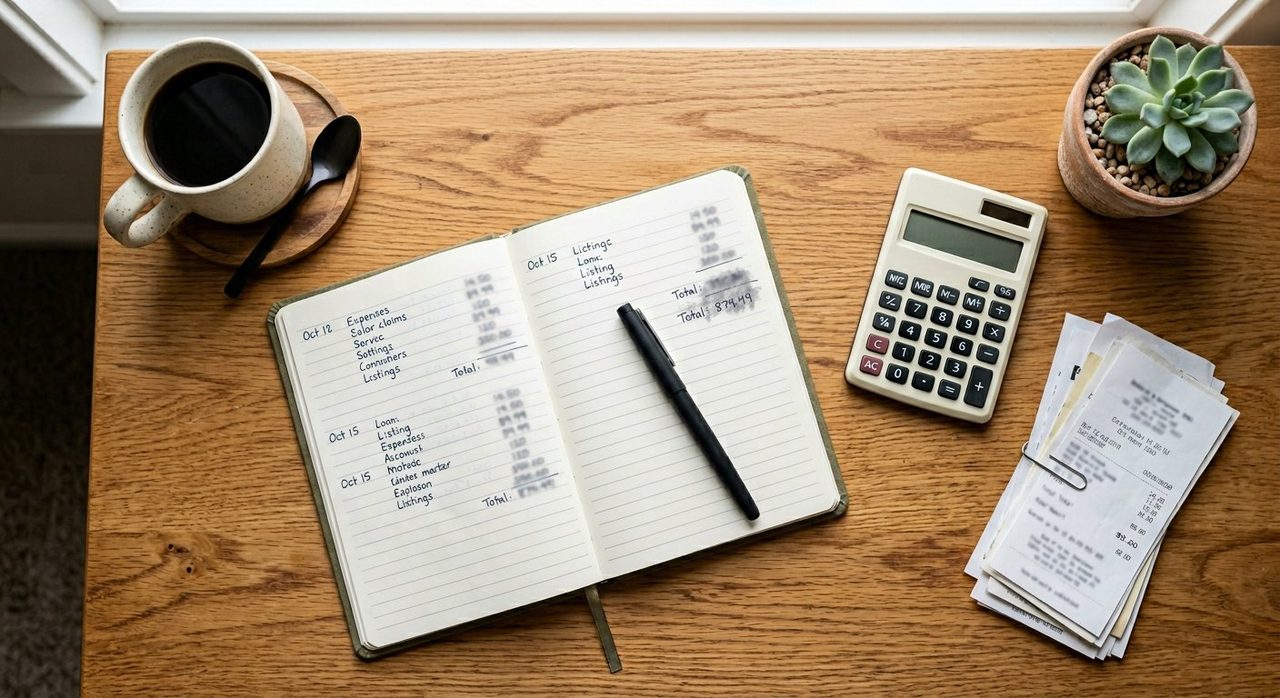
- A folder (digital or physical) for utility bills, rent receipts, internet bills.
- An expense-tracking app like QuickBooks Self-Employed, Wave, or even a simple spreadsheet.
- Receipts for any home-office furniture, equipment, software.
- A measurement (with photos) of your home office showing it's a dedicated space.
- A log of hours worked from the home office, if your jurisdiction asks for it.
QuickBooks Self-Employed
Automatically categorizes expenses, separates business from personal, generates Schedule C summaries. The standard tool for US freelancers.
Check QuickBooksRocketbook Smart Reusable Notebook
For paper receipts you want to digitize — scan into your accounting app instantly.
Common mistakes
- Claiming a space that fails the exclusive test. The most common audit trigger.
- Forgetting depreciation recapture. If you claim home-office depreciation and later sell the home, you'll owe tax on the recapture. Sometimes the simplified method is better just to avoid this.
- Mixing personal and business expenses. Use a separate bank account / credit card for business — makes everything cleaner.
- Not tracking equipment purchases. A $1,500 monitor and chair you forgot to deduct is a real loss.
When to hire a tax professional
The first year you claim home office, or the first year your situation changes meaningfully (new business structure, big equipment purchases, working from a second home), pay an accountant. A $200–500 consultation often pays for itself in the deductions they spot that you'd miss.
Final word
If you work from a real, dedicated home office space and your income is self-employment, the home office tax deduction is genuine money that's yours to keep. The barrier isn't complexity — it's record-keeping. Set up a simple system today, track all year, and consult an accountant the first year. The compound effect across multiple tax years is significant.
Frequently asked questions
Can W-2 employees claim the home office tax deduction?
In the US, no — not since the 2017 Tax Cuts and Jobs Act. The home office deduction is currently only available to self-employed individuals, independent contractors, and certain partners. This may change after 2025 when some provisions sunset; check current IRS guidance.
What counts as a 'home office' for tax purposes?
Generally: a space used regularly AND exclusively for business. A spare bedroom that doubles as a guest room doesn't qualify; a converted closet used only for work does. Rules vary by country — check your local tax authority.
What can I deduct besides the room itself?
Common deductible categories for self-employed workers: a portion of utilities, internet, rent or mortgage interest, home insurance, repairs, and depreciation. Plus directly-attributable items: a new desk, chair, monitor, software subscriptions.
Is the simplified method or actual expense method better?
The simplified method (in the US) gives you $5 per square foot up to 300 sq ft = max $1,500. The actual expense method requires more record-keeping but usually yields a larger deduction if your real costs are higher. Most people with a meaningful home office save more with actual expenses.
Do I need to keep receipts?
Yes. For at least 3 years after filing (longer in many jurisdictions). A simple expense-tracking app or a labeled folder works fine — what matters is that you can produce them if asked.
Spotted a mistake or want to suggest a product we should test? Get in touch — we read every message.