
Disclosure: WorkWise is reader-supported. When you buy through links on our site, we may earn an affiliate commission at no extra cost to you. Learn more.
At-a-glance recommendations
A fast comparison list for the products covered in this guide.
Ergodriven Topo Anti-Fatigue Mat (Standard)
The winner for most users. Genuinely reduces fatigue over long days because it doesn't let your feet fall into one position. 7-year warranty.
Imprint CumulusPRO Anti-Fatigue Mat
If you prefer a flat aesthetic or have delicate floors that need protection, this is the premium flat-mat pick.
Sky Solutions Anti-Fatigue Mat
If $40 is your absolute ceiling, it's better than no mat. Expect to replace within 12-18 months of daily use.
The anti-fatigue mat is the most overlooked part of any standing-desk setup. I've used three of the most-recommended mats — the Ergodriven Topo, the Imprint CumulusPRO, and the Sky Solutions standing mat — for 12+ months each. Here's how they actually compared.
The three contenders
Ergodriven Topo — $99
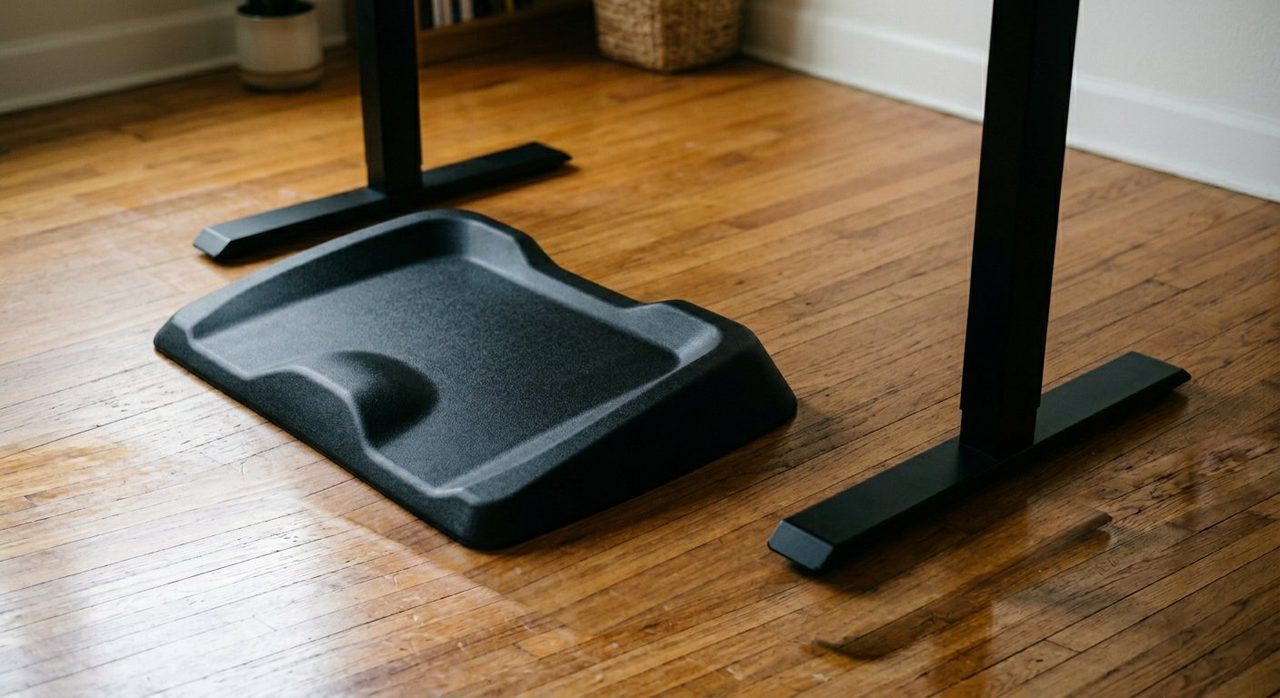
Contoured, multi-zone design with raised edges, a center "calf stretcher," and varying terrain across the surface. Encourages foot movement throughout the day.
Imprint CumulusPRO — $80
Flat, dense gel-foam mat. Premium materials, no contouring. The "luxury flat mat" choice.
Sky Solutions Anti-Fatigue Mat — $40
Flat foam mat at a much lower price point. Adequate cushioning, basic design.
Head-to-head: what mattered after a year
Comfort over 8 hours of standing
Topo wins clearly. The contours mean your feet are never in the same position for long, which is the actual cause of standing fatigue. The Imprint is comfortable but I noticed my feet ached after 4+ hours of stationary standing. The Sky Solutions mat was noticeably worse — okay for short sessions, fatiguing for long ones.
Durability
Topo and Imprint tied. Both showed minimal wear after 12 months of daily use. The Sky Solutions mat had visible foot indentations after 4 months and lost effective cushioning by month 8.
Floor protection
Imprint wins. Its flat bottom and rubberized backing protects hardwood and tile better. The Topo has small grippy bumps that worked on my carpet but I'd be cautious on softer floors.
Cleanability
Imprint wins. Wipes clean easily. Topo's contoured surface catches crumbs and small debris in the grooves; needs occasional vacuum.
Aesthetics
Imprint wins for traditional offices, Topo for casual. The flat black Imprint looks "professional"; the textured Topo looks more "playful" with multiple color options.
Our recommendations
Ergodriven Topo Anti-Fatigue Mat (Standard)
The winner for most users. Genuinely reduces fatigue over long days because it doesn't let your feet fall into one position. 7-year warranty.
Imprint CumulusPRO Anti-Fatigue Mat
If you prefer a flat aesthetic or have delicate floors that need protection, this is the premium flat-mat pick.
Sky Solutions Anti-Fatigue Mat
If $40 is your absolute ceiling, it's better than no mat. Expect to replace within 12-18 months of daily use.
What size do you need?
- Topo Mini (20"x17") — works for narrow standing zones or as a foot-rest accessory under a regular desk.
- Topo Standard (29"x26") — the right size for most standing desks. Room to shift weight and step side-to-side.
- Topo Comfort (34"x29") — for tall users or those who like to pace at the desk.
Final word
For most readers: Ergodriven Topo (Standard size). It's the mat I'd buy with my own money tomorrow if mine wore out. Pair it with our complete standing desk setup guide for the rest of the ergonomic picture.
Frequently asked questions
Do I really need an anti-fatigue mat for a standing desk?
Yes — almost without exception. Standing on a hard floor for 2+ hours causes lower-back fatigue, knee strain, and plantar pain. A good mat reduces all three measurably.
Are contoured mats better than flat ones?
For most users, yes. Flat mats reduce floor hardness but don't promote movement. Contoured mats (Topo, Ergodriven) encourage subtle position changes that keep blood flowing and reduce fatigue.
How long should an anti-fatigue mat last?
Quality mats (Topo, Imprint) last 5+ years of daily use. Cheap foam mats compress and lose their support within 6-12 months — false economy.
Can I use a yoga mat as a standing-desk mat?
Briefly, yes — but yoga mats are too soft and too thin. They compress immediately and don't provide the lateral stability your feet need for desk work.
Spotted a mistake or want to suggest a product we should test? Get in touch — we read every message.